
CBD and CBG: differences
CBD (cannabidiol) is the best-known cannabinoid in cannabis, while CBG (cannabigerol) is also being mentioned increasingly often. Both are natural, non-psychoactive cannabinoids from industrial hemp. How do they differ?
What is CBD?
CBD is the most common cannabinoid in the flowers of industrial hemp. It is not psychoactive and binds to the same receptors as cannabinoids produced by our body. More in the guide about the full spectrum.
What is CBG?
CBG is often called the »mother cannabinoid«, because other important cannabinoids, such as CBD and THC, are formed in the plant from its acidic form (CBG-A). For this reason, CBG is usually present only in small amounts in most cannabis varieties. Today, however, there are also specially bred cannabis varieties with a high content of CBG-A. These plants have reduced or absent activity of the enzymes that would otherwise convert CBG-A into other cannabinoids. Consequently, they contain more CBG and generally less THC. Like CBD, CBG is not psychoactive, which means that it does not cause drowsiness or a feeling of being high.
Main differences
| CBD | CBG | |
|---|---|---|
| Full name | cannabidiol | cannabigerol |
| Psychoactivity | no | no |
| Occurrence in cannabis | high | low |
| Role in the plant | final cannabinoid | precursor of other cannabinoids |
CBD and CBG together
In the natural full spectrum, both cannabinoids are present together with other constituents and act synergistically. At Dr. Gosar, we also offer combined products:
Frequently asked questions
Is CBG stronger than CBD?
CBD and CBG are non-psychoactive cannabinoids, but they act somewhat differently and often complement each other.
CBD (cannabidiol)
CBD is the most researched cannabinoid and people most commonly use it to support general well-being. It acts indirectly on the endocannabinoid system and also affects other receptors in the body.
Users most commonly associate CBD with:
- relaxation and calming,
- support in managing everyday stress,
- improved sleep quality,
- support for recovery after physical exertion.
Many people describe CBD as a more »calming« cannabinoid.
CBG (cannabigerol)
CBG is less researched than CBD, but interest in it is growing rapidly. It acts more directly on some receptors in the body than CBD.
Users often report that CBG provides:
- greater concentration and mental clarity,
- a feeling of alertness without a stimulating effect,
- support during daily activities,
- a general feeling of balance and well-being.
Many people describe CBG as a more »activating« or »invigorating« cannabinoid.
CBD or CBG?
- If you are primarily looking for relaxation and evening use, CBD is often the first choice.
- If you are interested in support for concentration and daytime activities, CBG may be of interest.
- Many users choose a combination of CBD + CBG, as their effects may complement each other.
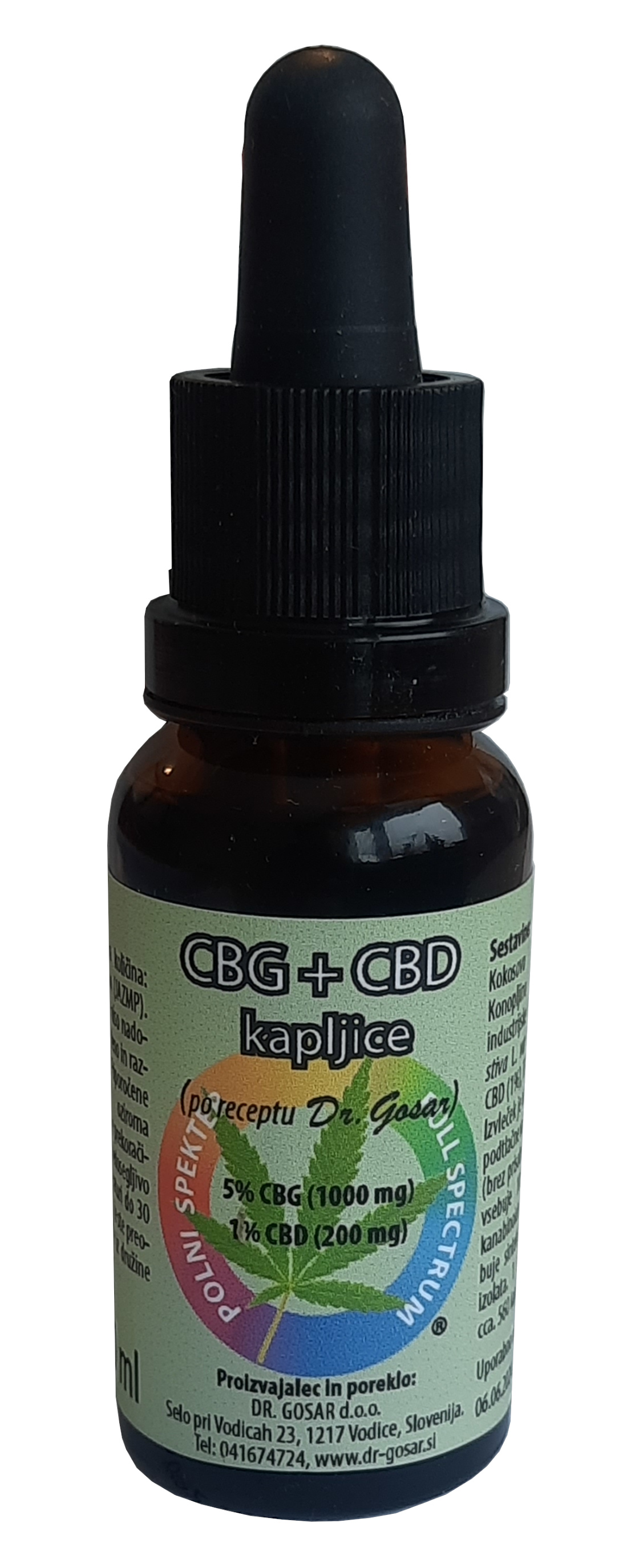
It is important to emphasize that individual responses to cannabinoids vary, so it is best to start with a lower dose and observe how you feel. Currently, most of the available research on these effects is primarily preclinical, along with user experiences, while clinical evidence in humans is still limited.
Can CBG change the effect of THC in the body?
Yes, theoretically CBG can change the effect of THC, but there is currently not enough good-quality research in humans to reliably say whether CBG weakens the effect of THC, enhances it, or delays it over time.
Why could a change occur?
THC produces its main psychoactive effect primarily by activating the CB1 receptor in the brain. CBG can also affect CB1 and CB2 receptors, but it does not act in the same way as THC. Its action on these receptors is complex and may depend on the concentration, system, and experimental conditions.
In simplified terms:
THC → strong CB1 agonist → psychoactive effect
CBG → interacts with CB1, but does not cause the same activation as THC
Therefore, it is possible that CBG under certain circumstances changes how THC acts on CB1 receptors.
Are CBD and CBG legal?
Products made from industrial hemp with THC below 0.2 % comply with Slovenian legislation; more in the description of the Hemp / CBD category.
Shop - Hemp / CBD